Does your organisation expect the unexpected?

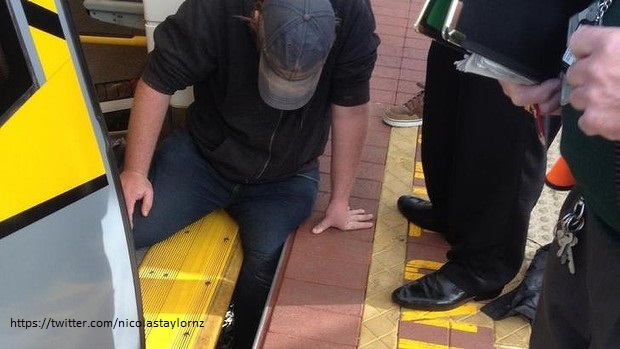
Image via news.com.au
How can any organisation cope with the unexpected?
Coping with the expected is relatively easy. Procedures and policies are put in place. The organisation’s structure is defined with clear reporting lines and responsibilities. HAZOPs and risk-assessments are done to define safeguards. All of this is necessary and important but it all addresses those things that we can anticipate or expect.
What happens when the unexpected happens?
Humans are good at coping with the unexpected. We cope all the time. No one expects to miss their train. No one expects their car to break down. No one expects to become sick. But these things happen regularly and we cope.
The one thing humans are not good at is imitating machines. We get tired, demotivated, make mistakes, become distracted. We can’t be relied on to always perform the same task in the same way – as machines can be relied on to do. When humans fail, why is this unexpected?
So why do we design organisations like machines, expecting humans to perform as components of the machine. We value the ‘well-oiled machine’, ‘working like clock-work’ as the ideal for an organisation made up of humans.
We take humans, remove their advantages and rely on their weaknesses.
Why do we not aspire to organisations as societies of people? Recognise that when (not if) the unexpected happens, it will be the people, not the ‘machine’, that can respond.
How does a ‘society’ cope?
Value diversity of opinions. When the unexpected strikes, no one will have a solution ready since it is unexpected. Who knows where the solution will come from? Being able to draw on a diversity of views is essential.
Value those who are willing to help others, who can communicate with and mentor others in the ‘community’ – training is too important to be left to the ‘training department’.
Value the views of those closest to the action. Solutions do not always come from the top or from the relevant department.
Value those known to have the expertise, regardless of where they sit in the organisation chart. Value those willing to develop and show expertise. Make sure they are known and recognised for their individual achievements – not just their job title.
Above all, recognise that the unexpected will happen regardless of our plans, risk assessments or hazard studies.
Welcome the early warning signs. Don’t keep expecting everything to run ‘like clockwork’. These signs are vital messages that something needs to be changed. Get in early and respond to them. Don’t try to ignore them – that simple means waiting for a disaster.
Welcome the chance to learn, adapt and change. The recognition of a need for change is not a sign of previous failure to anticipate something but a sign of resilience.
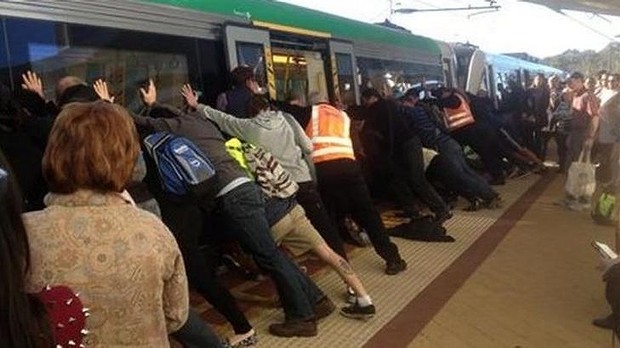
Commuters and staff push to tilt a train which was trapping a man’s leg between it and the platform. Facebook: Renae Bryant
Above all, shouldn’t we stop pretending that everything can be foreseen and planned, reduced to a machine design problem?