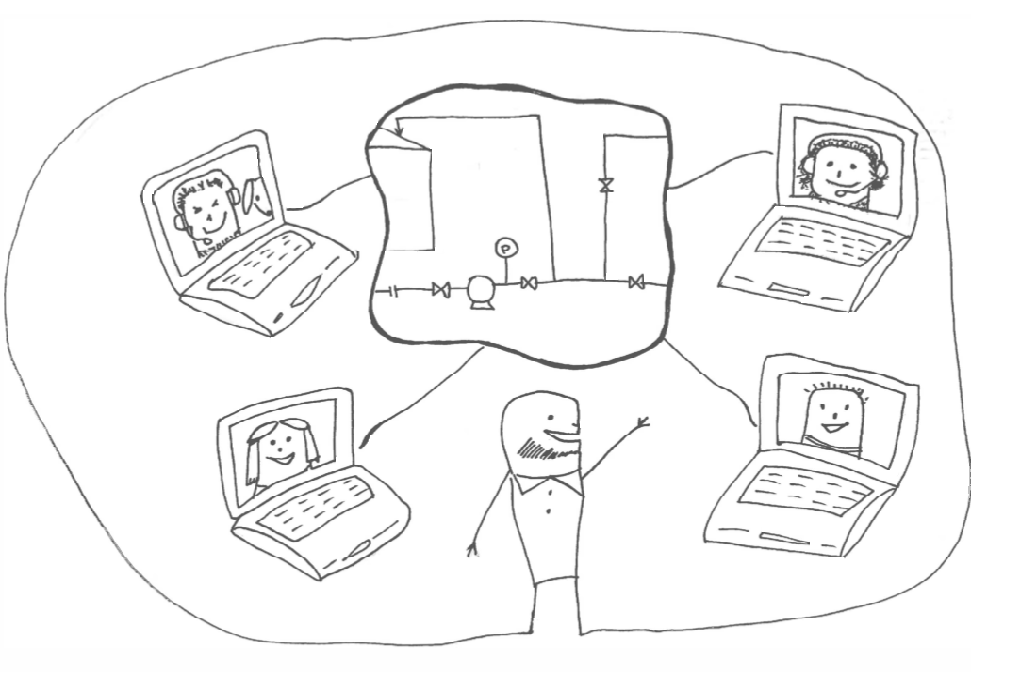
Back in March, when COVID was heading towards us full throttle here in Australia, it looked as if my employment was about to stop. A fair percentage of my paid work is as a HAZOP facilitator. I’ve been trained by some excellent and very experienced people, and I’ve run courses for HAZOP participants and HAZOP leaders. The practice and the techniques have been drilled into me. The sessions require a lot of concentration. Good communication is paramount. You need to know that everyone is paying attention. Online HAZOP was not an option.
So when I was asked by a client to run one, I flatly said no. I gave my reasons and the client agreed. The client came back to me a few days later and said that they didn’t have an option. At that point we came up with a few rules which have allowed us to run fairly successful HAZOPs online. These are the main reasons for the success:
- Limit the sessions to two hours per day. This means that people only have to concentrate for a limited period each day. One of the few advantages of social distancing is that people can work from home. There is no travel time. There is no need to complete the HAZOP in the shortest possible time while the team is together in the one place. Of course the overall duration of the HAZOP is longer, but people have other work to do in between sessions. It is often less disruptive to the project to run the sessions for two hours a day for a month, than to take the whole team away from their work for a week. You get more done in four by 2 hour sessions that in one 8 hour day, because people start the session each day refreshed. And you also have time in between sessions to get feedback, so you can alter your approach if required.
- Use good technology. The most important point is that people must be heard. Use good headsets with mics that don’t feed back.
- Use a good platform. I’ve found Zoom to be pretty good and the client was not concerned about the security issues.
- Use the camera option. It is better to be able to see the faces of the people. If they resist, push back. I had one client who claimed that the bandwidth was insufficient for video.
- Use a second screen. And make it a big high resolution screen. It makes things a lot easier. It means that two people can share different documents at the same time, or you can look at the heads of the attendees and the other screen.
- Do a test beforehand. Check that the link actually works. It’s frustrating and embarrassing to waste the time of the team who are ready to go.
- As facilitator, trial the technology. Spend an hour or two working out the quickest way to open your drawings, to position your guidewords. Get in five minutes before the session and set up your documents.
You might need to spend a bit of money for equipment like screens, headsets and platforms for yourself and your employees. It will pay for itself.
Having everyone in the same room will always be the best way to run these sessions. However, these odd circumstances are here for a while. And even when things go back to something like normal, people will have realised that the technology is more useful than we thought.
by Clark Gormley
Principal Risk Consultant